HomePest ControlWasps
urgent assistance recommended
Wasps
Also known as Common wasp, German wasp
Wasps are around 12 to 17mm long with a bright yellow and black banded body and a narrow waist. They are often mistaken for bees, but wasps have a smoother, less hairy body and a sharper outline. Steady activity around one point on a building, such as a roof edge or air brick, usually points to a nest nearby.
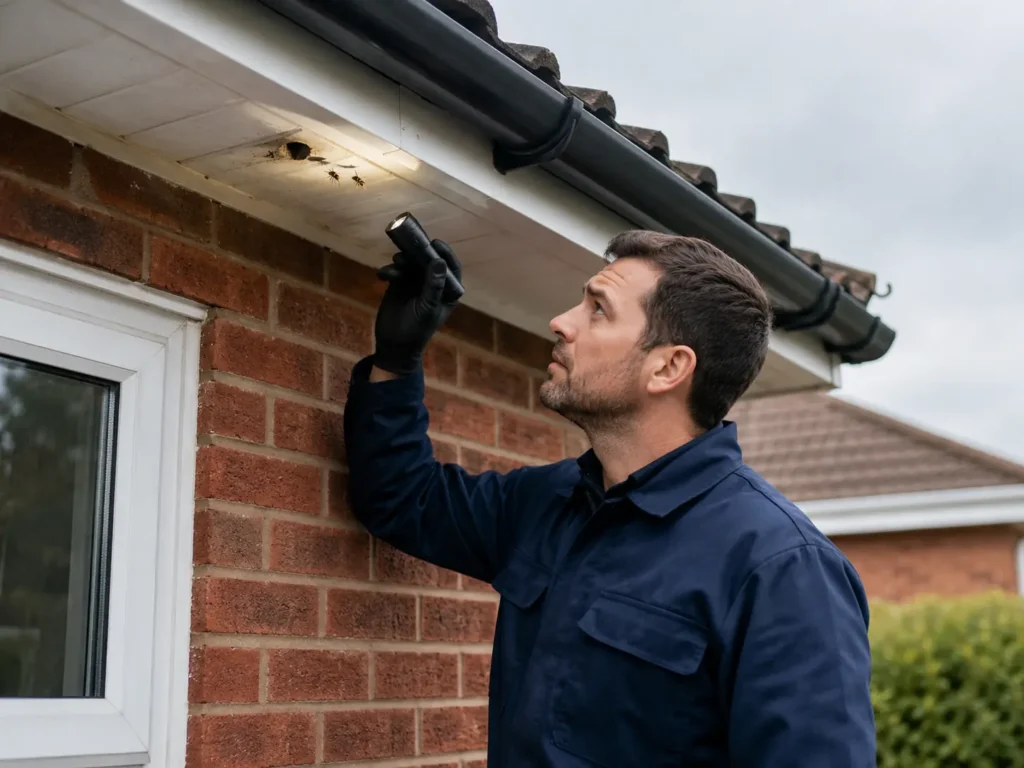
What to do now
Keep people and pets away from the affected area. Do not block the nest entrance or attempt to disturb it. Call for advice if the nest is close to a doorway, walkway or occupied room.
Signs of an infestation
- Numbers of wasps flying to and from one point on the building
- A papery, greyish nest in a loft, shed, wall cavity or bush
- More activity and more defensive behaviour in late summer
- Scratching or rustling sounds from a wall or ceiling void
Risks to health and property
Wasp stings are painful and, for a small number of people, can cause a serious allergic reaction. Wasps can sting more than once and may become aggressive when a nest is disturbed. Nests near doorways, play areas or busy walkways carry a higher risk for families, staff and customers.
Where you will find it
- Roof spaces and loft insulation
- Wall cavities and behind fascia boards
- Sheds, garages and outbuildings
- Hedges, bushes and garden undergrowth
How treatment works
Treatment usually means applying a controlled product at the nest entrance so returning wasps carry it through the nest. We assess the location and access first, explain what is involved and take care around children, pets and food areas. Nest treatment should always be carried out by a trained technician with the correct protective equipment.
Preventing it coming back
- Seal gaps around rooflines, air bricks and cavities before spring
- Keep bins closed and clear fallen fruit from the garden
- Check sheds and lofts early in the season for small, forming nests
- Keep people and pets away from an established nest rather than disturbing it
Need help with this pest?
Call for urgent advice, or start a short enquiry and we will explain the right next step.