HomePest ControlRats
urgent assistance recommended
Rats
Also known as Brown rat, Norway rat
Brown rats have a sturdy body, a blunt muzzle and a tail that is usually shorter than the head and body combined. Adults are commonly brown-grey, although colour can vary. Indoor sightings, fresh droppings, gnaw marks or repeated movement near drains and wall edges can indicate active access to the building.
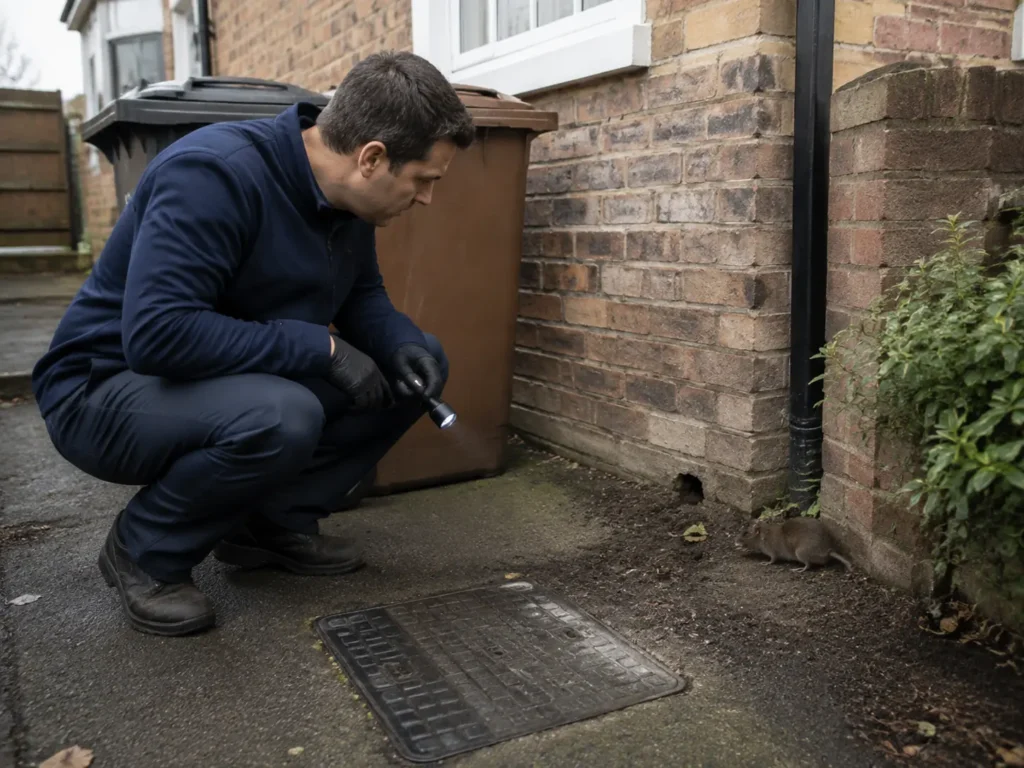
What to do now
Avoid handling rats, droppings or contaminated nesting material. Keep children and pets away from the affected area, secure food and animal feed, and do not block an active access point before it has been assessed. Same-day professional advice is recommended where there is active indoor evidence or significant activity.
Signs of an infestation
- Dark, capsule-shaped droppings along walls, behind equipment or near stored food
- Fresh gnaw marks on packaging, timber, plastic or cables
- Greasy rub marks and well-used runs beside walls or fences
- Scratching sounds, disturbed insulation or burrows near buildings
Risks to health and property
Rats can contaminate food and surfaces with urine, droppings and nesting material. Gnawing may damage pipes, packaging, insulation and electrical cables. Activity around kitchens, food stores, livestock areas or waste compounds should be assessed promptly so the source and access route can be identified.
Where you will find it
- Drainage systems, service ducts and wall voids
- Bin stores, yards, sheds and outbuildings
- Commercial kitchens, warehouses and food storage areas
- Gardens, embankments and ground beside building foundations
How treatment works
We begin by confirming activity, access routes and the food or shelter supporting it. A control plan may combine monitored trapping, secured professional control measures, proofing and practical hygiene recommendations. Follow-up checks are used to review activity and adjust the plan where required.
Preventing it coming back
- Keep bins closed and store food or animal feed in robust containers
- Repair gaps around pipes, doors, drains and service entries
- Remove dense cover and accumulated materials beside buildings
- Investigate damaged drains or recurring activity near drainage points
Need help with this pest?
Call for urgent advice, or start a short enquiry and we will explain the right next step.