HomePest ControlMice
standard assistance recommended
Mice
Also known as House mouse
House mice are small brown-grey rodents with a pointed snout, large ears and a tail about as long as the head and body combined. Rice-sized droppings, gnaw marks and light scratching noises, particularly after dark, can indicate activity even when mice are not seen.
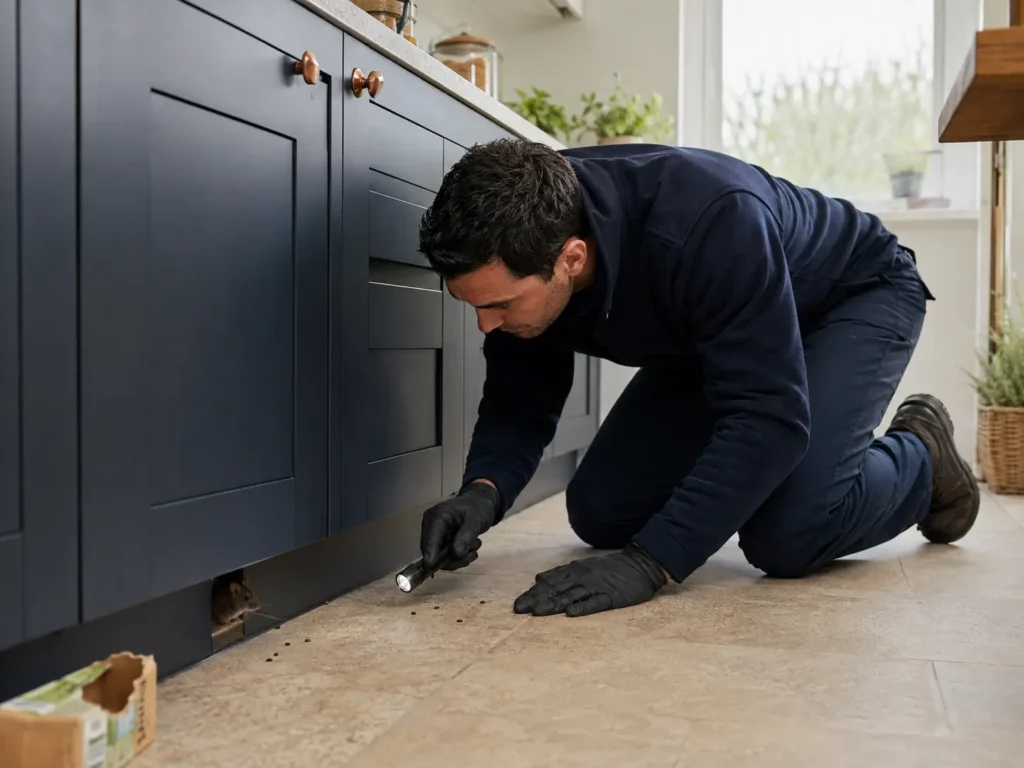
What to do now
Avoid touching or sweeping droppings. Keep children and pets away, place food and animal feed in sealed containers, and photograph any signs if it is safe to do so. Arrange a prompt assessment when there is active indoor evidence.
Signs of an infestation
- Small, dark droppings shaped like grains of rice
- Gnawed food packaging, timber, insulation or cables
- Scratching or scurrying sounds at night
- Nests made from shredded paper, fabric or insulation
Risks to health and property
Mice can contaminate food and work surfaces, damage packaging and wiring, and contribute to allergens indoors. Prompt assessment is sensible where there is repeated activity inside a home, food business or storage area.
Where you will find it
- Kitchens, pantries and utility rooms
- Lofts, wall voids and spaces beneath floors
- Warehouses, food stores and plant rooms
- Areas close to pipes, doors and service penetrations
How treatment works
We inspect likely entry points, harbourage and food sources before recommending a proportionate plan. This may include monitored trapping or securely positioned control measures, followed by proofing, hygiene advice and checks to confirm activity has reduced.
Preventing it coming back
Seal suitable gaps once activity is controlled, maintain door seals, store food and feed securely, reduce clutter and keep vegetation away from vulnerable external openings.
Need help with this pest?
Call for urgent advice, or start a short enquiry and we will explain the right next step.