HomePest ControlFleas
standard assistance recommended
Fleas
Also known as Cat flea, dog flea
Fleas are tiny, dark insects with a flattened body and strong hind legs for jumping. Cat fleas are the species most often found in UK homes and can affect cats, dogs and people, particularly where pets or wildlife have introduced them.
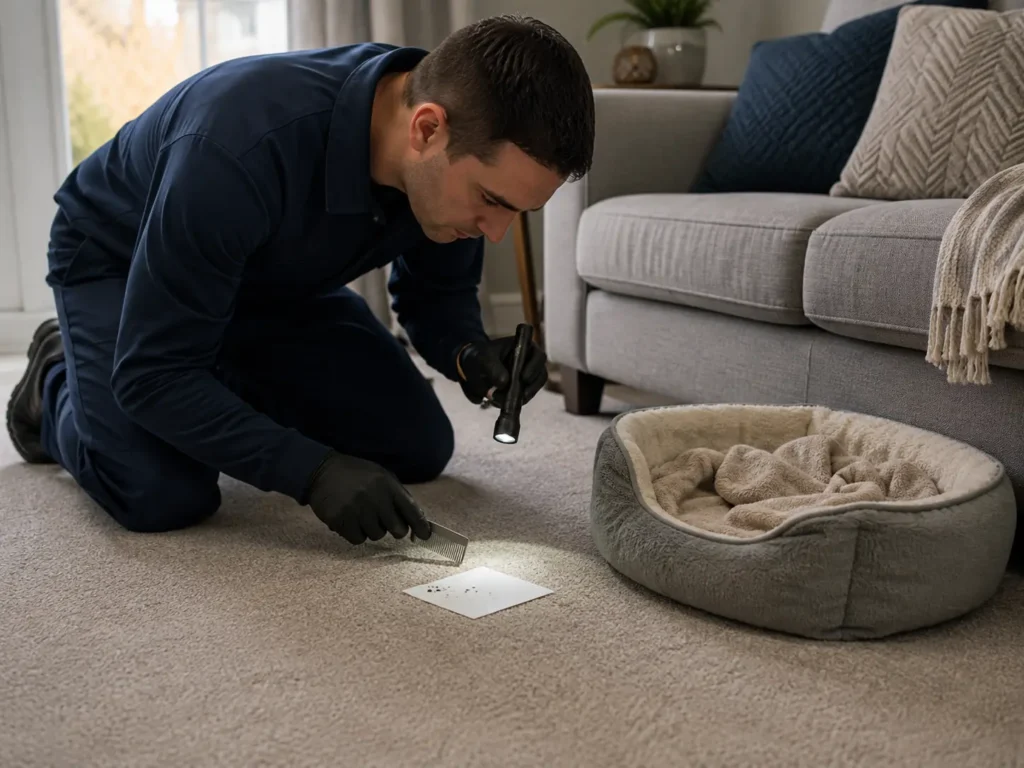
What to do now
Contact your vet for advice about treating pets at the same time as the property. Avoid moving infested textiles between rooms. Vacuuming and washing suitable bedding may help, but follow professional advice before using sprays or other products.
Signs of an infestation
- Small itchy bites, often around ankles and lower legs
- Pets scratching or grooming more than usual
- Dark flea dirt in pet coats or bedding
- Adult fleas jumping from carpets, upholstery or pet resting areas
Risks to health and property
Flea bites can cause irritation or allergic reactions, while affected animals may experience significant discomfort. Their life cycle includes stages away from the host, so activity can persist in a property after adult fleas are first noticed.
Where you will find it
- Pet bedding and favourite resting places
- Carpets, rugs and upholstered furniture
- Floorboard gaps and edges of rooms
- Properties with previous pets or nearby wildlife nests
How treatment works
Effective control combines veterinary treatment of animal hosts with a planned treatment of the affected environment. We assess likely sources, explain preparation, treat suitable areas and advise on follow-up while remaining life stages develop.
Preventing it coming back
Maintain an appropriate veterinary parasite-control programme, wash pet bedding regularly, vacuum resting areas and address wildlife access or old nesting material where safe and lawful.
Need help with this pest?
Call for urgent advice, or start a short enquiry and we will explain the right next step.