HomePest ControlBed bugs
standard assistance recommended
Bed bugs
Also known as Common bed bug, Cimex lectularius
Bed bugs are flat, reddish-brown insects that are often compared in size and shape to an apple seed. They commonly travel between properties in luggage, furniture and personal belongings, then hide close to where people rest.
What to do now
Do not move bedding or furniture from room to room, as this can spread activity. Avoid sleeping elsewhere or applying unplanned products. If possible, keep a clear photograph or safely contained sample and wait for preparation guidance before moving belongings.
Signs of an infestation
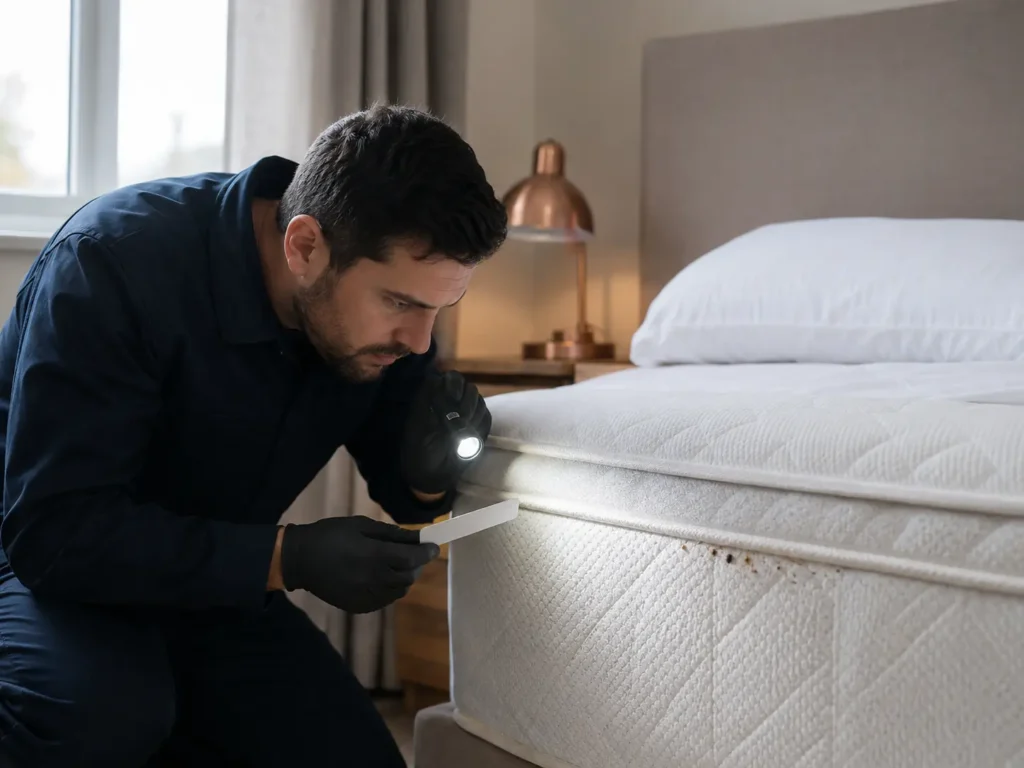
- Live insects in mattress seams or bed-frame joints
- Dark spotting on bedding, mattresses or nearby surfaces
- Pale shed skins or small eggs in sheltered gaps
- Unexplained bites, although bites alone do not confirm bed bugs
Risks to health and property
Bed bug bites can cause irritation, allergic reactions and considerable loss of sleep or stress. They are not generally regarded as disease vectors, but an untreated infestation can spread to adjoining rooms or other properties.
Where you will find it
- Mattress seams, bed frames and headboards
- Upholstered furniture and bedside items
- Skirtings, wall fixings and cracks close to beds
- Hotels, care settings and other shared accommodation
How treatment works
A detailed inspection establishes the affected areas and level of activity. We then explain the preparation needed and recommend a planned treatment programme, with appropriate follow-up inspections because eggs and concealed insects may not all be affected at the same time.
Preventing it coming back
Inspect luggage after travel, check second-hand furniture carefully, reduce clutter around sleeping areas and use monitoring where there is a known risk of reintroduction.
Need help with this pest?
Call for urgent advice, or start a short enquiry and we will explain the right next step.