HomePest ControlAnts
standard assistance recommended
Ants
Also known as Black garden ant, common black ant
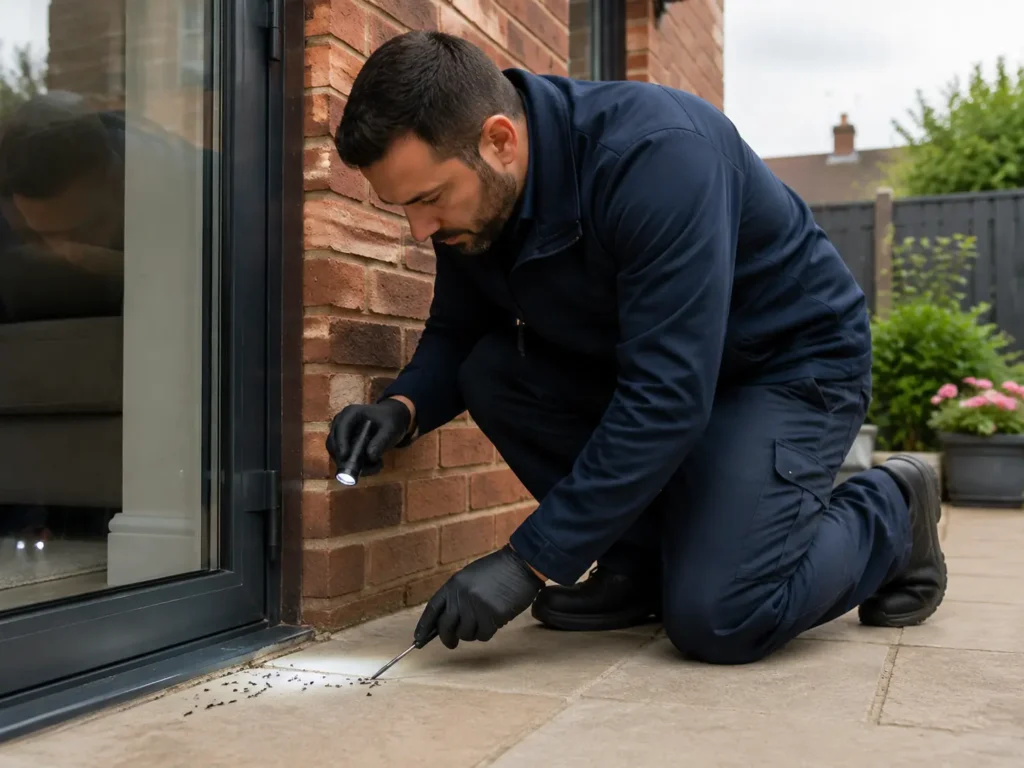
Black garden ants are small dark insects that form organised trails between a nest and sources of food or water. Nests are often outdoors, beneath paving or close to foundations, although workers can travel through very small gaps into buildings.
What to do now
Remove accessible food, wipe up spills and store ingredients securely. Avoid disturbing the nest or scattering products across several areas, as this can make the source harder to trace. Note where trails begin and end if it is safe to do so.
Signs of an infestation
- Regular trails along walls, floors or worktops
- Loose soil or fine debris around cracks and paving
- Winged ants emerging in warmer weather
- Repeated activity around food preparation or storage areas
Risks to health and property
Common garden ants are mainly a nuisance, but they can contaminate exposed food and become difficult to manage when a nest is inaccessible. Most common species do not damage a building, so correct identification is important before treatment.
Where you will find it
- Kitchens, pantries and waste-storage areas
- Patios, paving joints and foundations
- Wall cavities and gaps beneath floors
- Commercial food preparation and storage areas
How treatment works
We identify the likely species, trace routes and locate the nest or main harbourage where possible. Targeted professional control is then placed or applied appropriately, with monitoring and practical hygiene or proofing advice.
Preventing it coming back
Keep food areas clean, manage waste, repair moisture issues and seal suitable gaps after the infestation is controlled. Trim vegetation that gives ants easy access to walls and openings.
Need help with this pest?
Call for urgent advice, or start a short enquiry and we will explain the right next step.